UE 5.8: LiveLink & Animation Framework Deep Dive
By Kiril Kostadinov
Unreal Engine 5.8 is still in preview but the animation and character pipeline changes are already clear enough to talk about. Two areas got the most meaningful investment this cycle: the Unreal Animation Framework (UAF) - the long-anticipated successor to Animation Blueprints - and a set of Control Rig and Live Link quality-of-life improvements that have been building since 5.6.
Unreal Animation Framework - First Real Debut
UAF (sometimes called AnimNext internally) has been brewing for a while. 5.8 is the first release where it’s substantive enough to actually evaluate. It ships as Experimental but Epic’s own Game Animation Sample Project (GASP) will ship with a character set up entirely in UAF - which is the clearest possible signal that this is the real direction for the animation system going forward.
What makes UAF different from Animation Blueprints:
- UAF Anim Graph - replaces the traditional Anim Blueprint graph with a data-oriented evaluation model that’s designed to be faster and more composable
- UAF Modules - discrete, reusable animation logic units that can be layered without the monolithic state machine patterns you fight with in classic Anim BPs
- UAF State Tree - integrates with UE’s State Tree system for cleaner, decoupled state logic
- UAF Data Interfaces - a typed, explicit way to pass data into animation evaluation rather than relying on Blueprint variables and event graphs
- UAF Workspace - a unified authoring environment for the above components
The system requires enabling both the Unreal Animation Framework plugin and the UAF Anim Graph plugin - they’re separate. The two-plugin requirement is a known friction point that will likely collapse into a single toggle by the time UAF exits Experimental.
For studios: this is worth learning now. UAF is clearly the future of character animation in UE and the GASP integration means there will be solid reference material from day one.
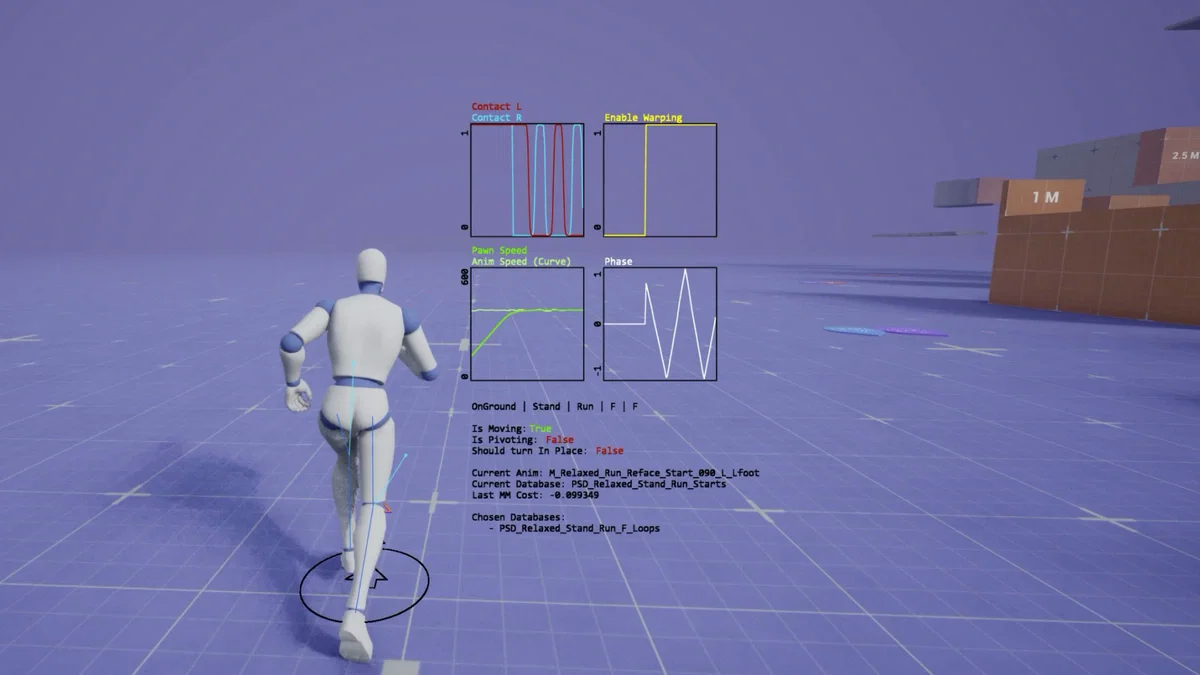 Via biunivoca.com - UE 5.7 Game Animation Sample Project updates
Control Rig Physics - Now in Beta
After debuting as Experimental in 5.7, Control Rig Physics graduates to Beta in 5.8. This means physics-driven secondary motion - hair, clothing overlap, jiggle - directly inside Control Rig, without needing to route through a separate simulation pass or external tool.
The Beta designation means Epic considers it stable enough for production use with the usual caveats. For rigs that need believable secondary motion without the overhead of a full cloth or physics sim, this is a practical improvement in the 5.8 timeframe.
Direct Mesh Controls (DMC) - Experimental
New in 5.8: Direct Mesh Controls let you place Control Rig controls directly onto sections of a Skeletal Mesh, without authoring a full rig hierarchy. The use case is surgical: apply controls to a specific region of a character - a face, a hand, a cape - without touching the rest of the rig.
For AI-generated animation workflows where you’re retargeting or post-processing generated motion onto specific mesh regions, DMC is immediately useful. You can make targeted corrective adjustments without rebuilding rig structure.
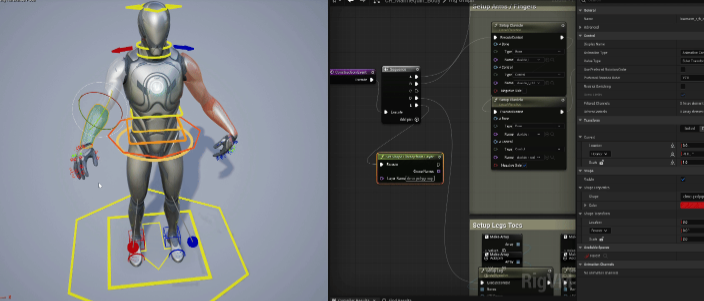 Via unreal-university.blog - UE 5.8 Every Major New Feature Explained
Facial Animation & Morph Target Tooling
5.8 consolidates several facial pipeline improvements:
- Sculpt-driven facial workflows directly in the Editor - blend shape authoring without round-tripping to a DCC
- Shot-based sculpting - per-shot morph target overrides for fine-tuning facial performances in context
- Advanced morph target support across stylized characters, custom skeletal meshes and MetaHumans
- Improved face rigging capabilities that better support the MetaHuman face joint hierarchy
These improvements are relevant for teams doing any in-engine facial performance work or using MetaHuman Animator output that needs correction passes.
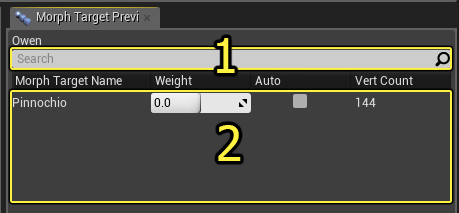 Via Unreal Engine 5.7 Documentation - Morph Target Previewer
Live Link - What’s Carried Forward from 5.7
Live Link didn’t get a headline feature in 5.8’s preview notes but the foundation put in place over the last two releases is worth understanding as a complete picture:
Live Link Broadcast Component (added in 5.7): Unreal Engine can now act as a Live Link source - broadcasting animation data from within the engine to other machines on the network. This inverts the traditional flow, where UE consumed data from external sources. The implication for multi-machine virtual production setups is significant.
Live Link Hub - Data Retiming: You can designate a single subject as the timecode master for all other Live Link subjects, then lock all incoming streams to a common framerate. This was a real pain point in multi-device performance capture setups where source devices ran at different rates.
Live Link Hub - Subject Management: The Hub continues to mature as the production-grade management layer for complex multi-source setups. For teams running mocap, facial capture, camera tracking and prop tracking simultaneously, the Hub is now the right place to manage that complexity - not the engine’s own Live Link client.
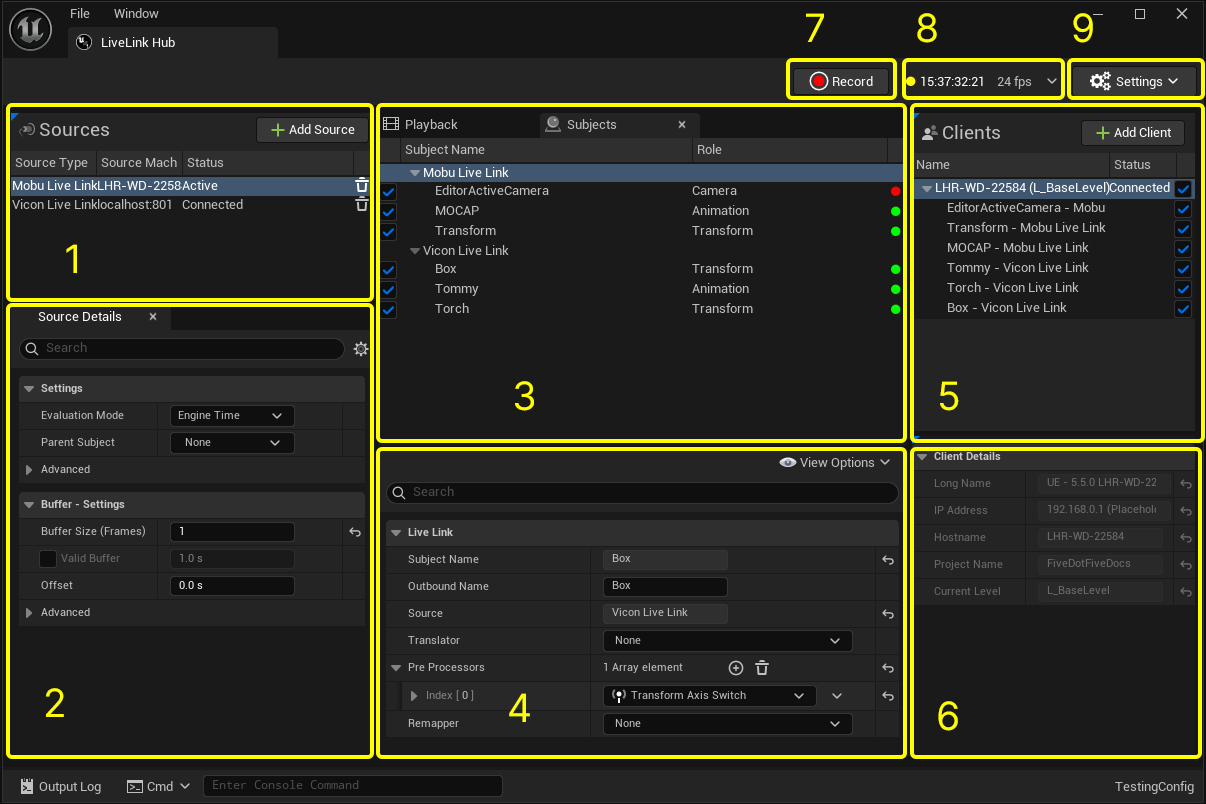 Via Unreal Engine 5.7 Documentation - Live Link Hub UI Reference
What to Watch For in the Full 5.8 Release
The preview notes focus on the big headline features. The full 5.8 release notes typically surface more incremental Live Link and animation fixes. Areas to watch:
- UAF ↔ Live Link integration - how Live Link data flows into the new UAF evaluation graph will define how production-ready UAF is for performance capture pipelines
- Live Link Face + MetaHuman Animator convergence - as MetaHuman Animator matures, the division between Live Link Face capture and the Animator pipeline is worth tracking
- Mover + UAF root motion - Mover (the character movement replacement) and UAF have both been evolving in parallel; their root motion integration story in 5.8 will matter for anyone building next-gen character controllers
The animation pipeline is in a transitional moment. UAF is real enough to learn but not stable enough to bet a shipped title on yet. Control Rig Physics and DMC are filling in the gaps in the current system while that transition plays out. The smart move for 5.8 is to run a parallel track: keep shipping on Anim Blueprints and start building UAF familiarity with your GASP-based reference.
At Lunar Lizard, DMC and the facial sculpting pipeline improvements are the ones we’re most directly interested in - they fit into how we handle AI-generated motion post-processing. We’ll have more to share once the full 5.8 ships.
Questions? Reach out here.